
Heated Neck Massager vs. Vibration: Which One Actually Relieves Tension?
If you’ve spent any time shopping for a neck massager, you’ve noticed the split. Some devices lead with heat. Others lead with vibration, percussion, or kneading. A few do everything at once and charge you for the privilege.
The marketing rarely explains why you’d want one over the other — which makes it hard to know whether you’re buying the right thing for the specific way your neck hurts. Here’s the practical breakdown.
What heat actually does
Warmth applied to the neck and shoulders is one of the oldest and simplest approaches to muscle tension, and it’s still recommended by physiotherapists for good reason.
Heat encourages blood flow to the area it’s applied to. More circulation to a tight, guarded muscle generally means that muscle finds it easier to let go. It’s the same principle behind a hot shower loosening you up in the morning, or a heat pack on a stiff lower back.
Heat tends to be most useful when:
- Your neck feels stiff and tight rather than sharply painful
- The tension has built up gradually — over a workday, a long drive, a bad night’s sleep
- You want something passive you can sit with for 15 minutes without doing anything
Heat is generally not the first choice for a fresh injury with swelling. For anything acute, sudden, or accompanied by swelling, cold is the conventional starting point — and a doctor is the right call before you self-treat.
What vibration and kneading do
Mechanical massage works differently. Instead of warming tissue passively, it physically moves it — compressing, releasing, and stimulating the muscle and the nerve endings around it.
This is where you get the sensation people describe as “working out a knot.” Vibration and kneading tend to be better suited to:
- Localized tight spots — that one point at the base of your skull, or the ridge of your trapezius
- Tension that feels knotted rather than diffusely stiff
- Situations where you want something that feels active and targeted
The trade-off: mechanical massage is easy to overdo. More pressure is not automatically better, and a device that leaves you sore the next day was probably used too aggressively or for too long.
Why the combination is usually the answer
Most people don’t have purely one kind of neck tension. A desk worker at 4pm typically has both — a general stiffness across the whole shoulder line and a couple of specific spots that feel like they need pressure.
That’s the case for a device that does both. Heat softens the tissue first; mechanical pressure then works more comfortably and effectively on tissue that isn’t braced against it. Applying deep pressure to a cold, guarded muscle is both less pleasant and less productive.
If you’re choosing between a heat-only wrap and a vibration-only device, the honest answer is: pick the one that matches your dominant symptom. If you can get both in one device without a large price jump, that’s usually the better buy.
How the CHOOSE-US 4D Bionic Hands Massager approaches this
Our massager was built around the combination, with a specific twist on the mechanical side.
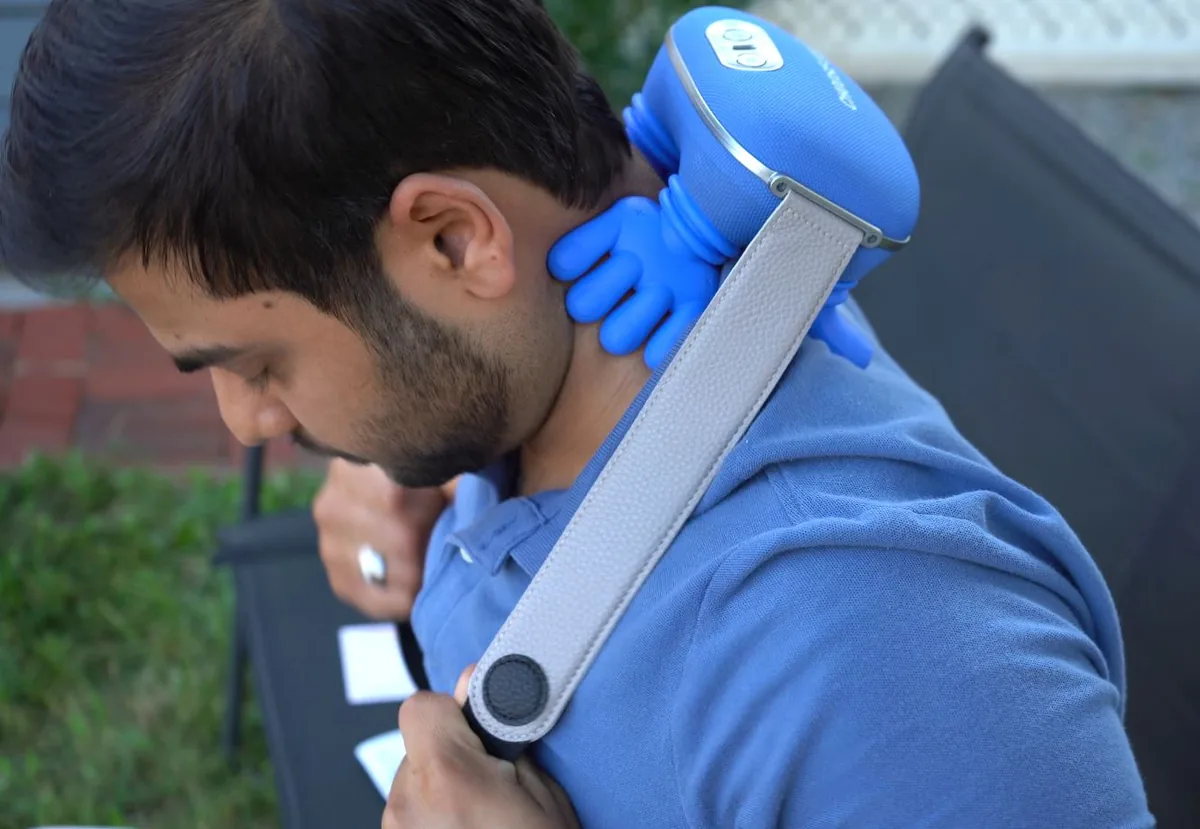
Instead of vibration motors or rolling nodes, it uses bionic hand-shaped grips that squeeze and release across your neck and shoulders. The design intent is to mimic the kneading motion of a human hand rather than the buzzing of a vibration unit — a slower, deeper compression rather than a fast oscillation.
Heat is built in and works alongside the kneading rather than as a separate mode you toggle between.
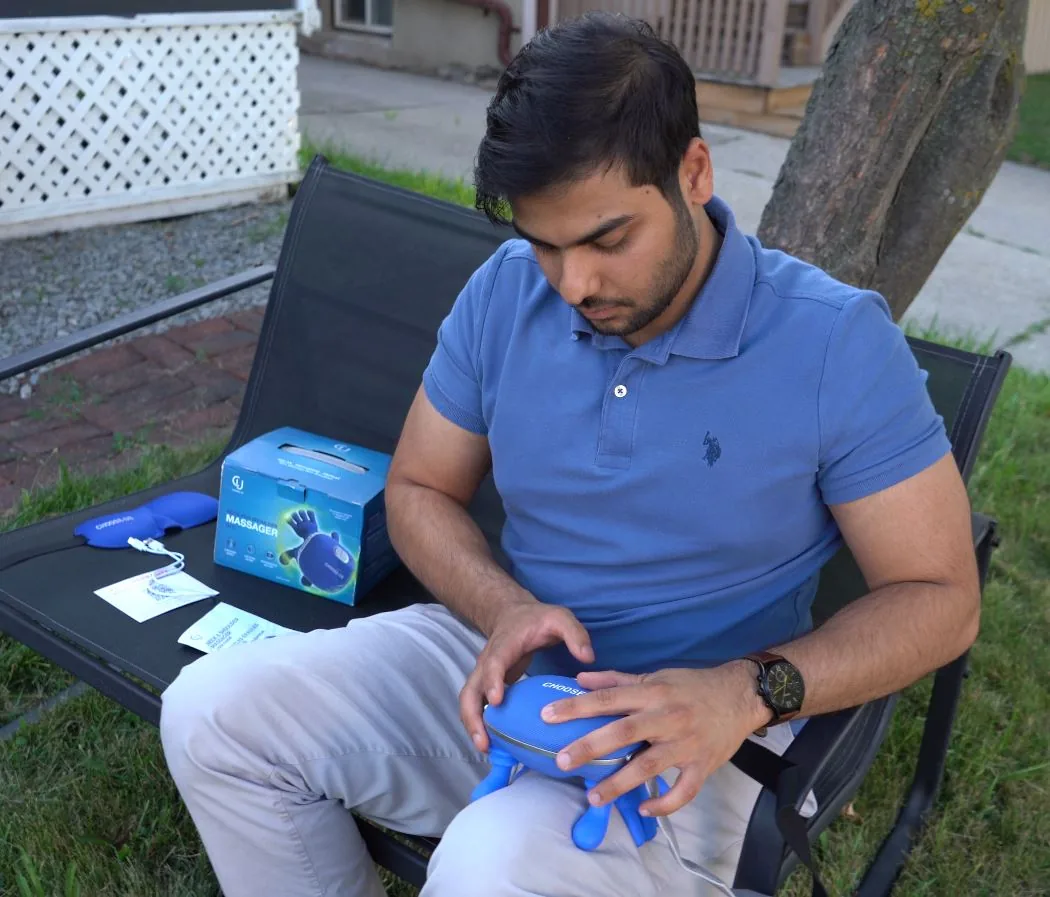
A few practical notes:
- It straps on, so your hands stay free — you can use it at your desk or on the couch
- It’s not limited to the neck; the same grips work on shoulders, lower back, calves, and thighs
- Multiple intensity levels, so you can start light and work up rather than starting at maximum
Currently rated 4.5 stars from 21 reviews on Amazon.
Checkout happens securely on Amazon.com. Price and rating shown are refreshed periodically; Amazon is the source of truth.
How to actually use heat and massage well
A few things that matter more than which device you buy:
- Keep sessions short. Ten to fifteen minutes is plenty. Longer sessions don’t produce proportionally better results, and with heat there’s a genuine burn risk on skin that’s gone numb to the sensation.
- Start on the lowest intensity. Work up over several sessions. The instinct to crank it to maximum on day one is how people end up bruised.
- Don’t use heat on numb skin. If an area has reduced sensation for any reason, you can’t reliably feel when it’s too hot.
- Treat it as maintenance, not a cure. A massager relieves tension that’s already there. If the tension keeps coming back every single day, the cause is upstream — usually posture, monitor height, stress, or sleep position. If it builds up during the workday, see our guide to neck pain from desk work.
- See a professional for anything persistent. Numbness, tingling, radiating arm pain, or neck pain that lasts more than a couple of weeks needs a doctor, not a gadget.
Quick comparison
| Heat only | Vibration / kneading only | Both combined | |
|---|---|---|---|
| Best for | General stiffness | Specific knots | Mixed everyday tension |
| Feels like | Passive warmth | Active pressure | Warm-then-work |
| Session length | 15–20 min | 10–15 min | 10–15 min |
| Main risk | Skin burns | Overuse soreness | Both — go gently |
Frequently asked questions
Does heat actually help neck pain, or does it just feel nice?
Both. Warmth increases circulation to the area, which generally helps tight muscles relax. The pleasant sensation isn't separate from the effect — relaxation is part of how it works.
Is vibration or kneading better for knots?
Kneading — a squeeze-and-release motion — tends to feel more effective on specific tight spots than high-frequency vibration, which spreads energy more diffusely. This is why our massager uses hand-shaped grips rather than vibration motors.
How long should I use a neck massager for?
Ten to fifteen minutes per session is a sensible default. Longer isn't better, and with heated devices, extended sessions increase burn risk.
Can I use a heated massager every day?
Generally yes, at moderate intensity and short duration. If you're using one daily and the tension always returns, it's worth looking at what's causing it rather than only treating it.
Should I use heat or ice for neck pain?
Heat for chronic stiffness and muscle tension. Ice for fresh injuries or swelling. If you're not sure which situation you're in, ask a doctor.